6 Days
Specific Tour
Unlimited
___
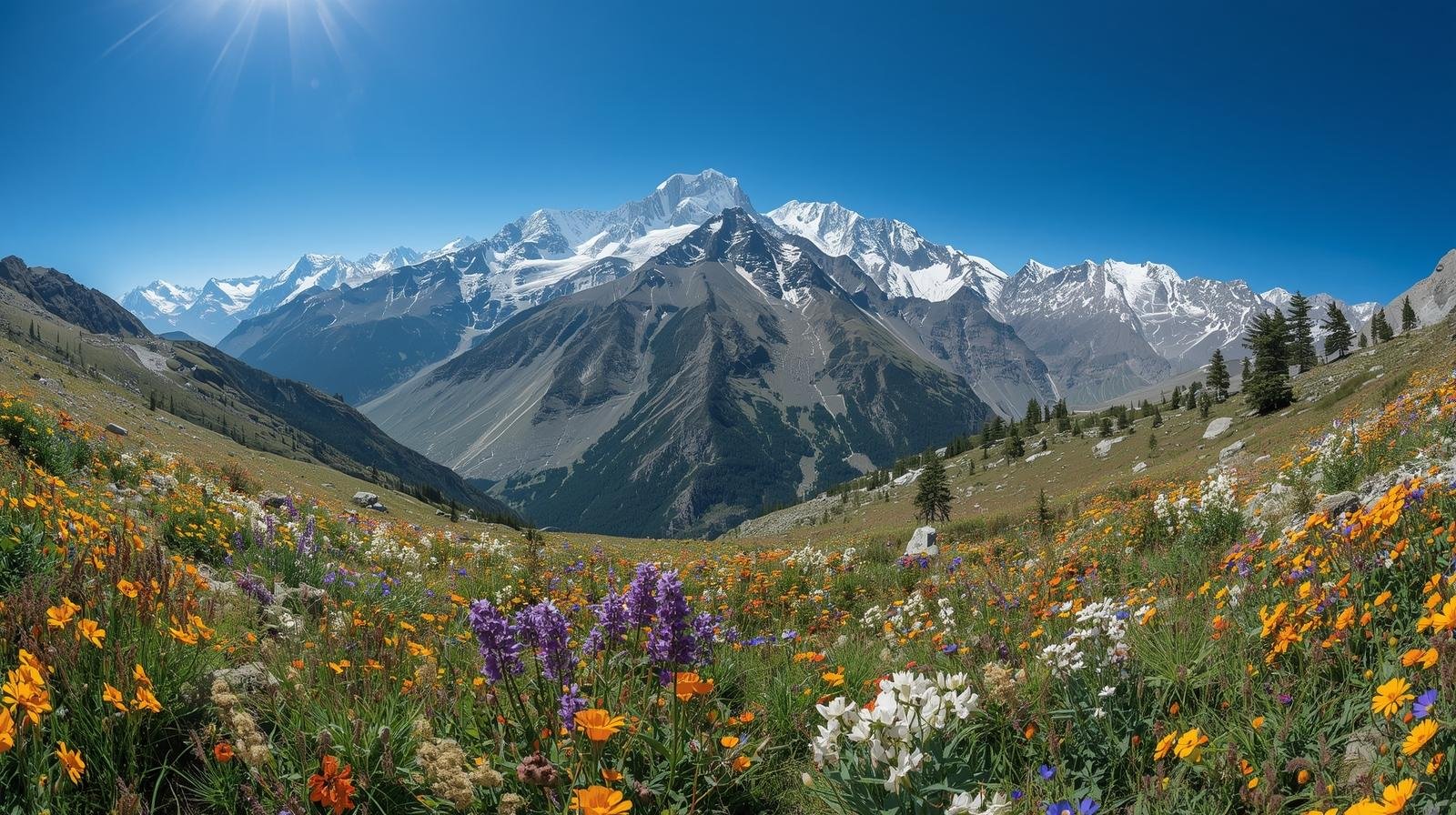
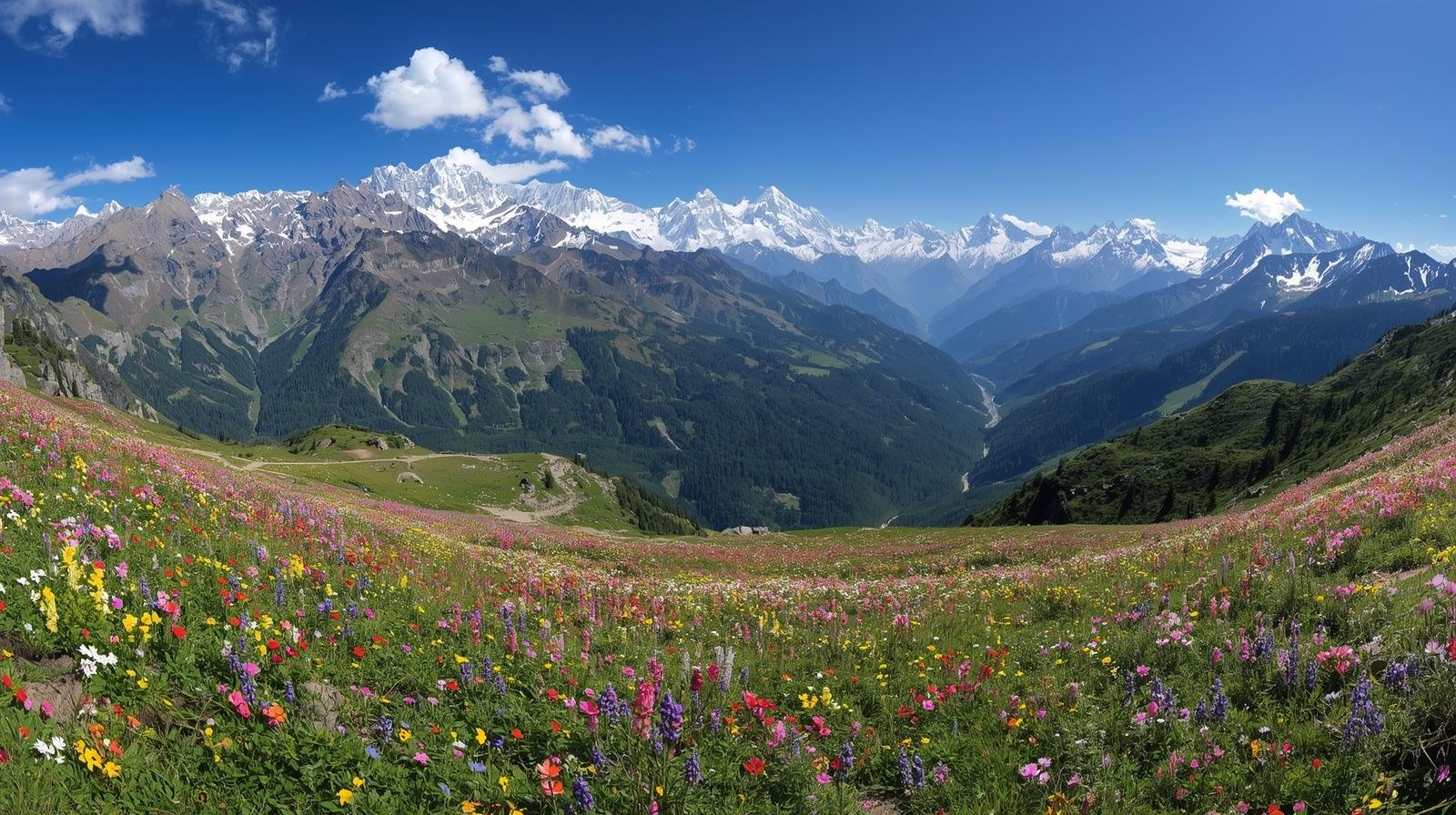
The Valley of Flowers Trek in Uttarakhand is one of the most enchanting Himalayan treks, famous for its breathtaking meadows and vibrant alpine blossoms. Nestled in the Nanda Devi Biosphere Reserve, this UNESCO World Heritage Site transforms into a paradise each monsoon, making the Valley of Flowers Trek a bucket-list adventure for nature lovers and trekkers alike. With over 600 species of wildflowers, snow-clad peaks, and sparkling streams, the valley feels like a living painting. Easy to moderate in difficulty, the Valley of Flowers Trek is perfect for beginners, families, and anyone seeking a soulful Himalayan experience.
( The Valley of Flowers Trek is one of the most popular and breathtaking treks in the Indian Himalayas. Located in Chamoli district of Uttarakhand )
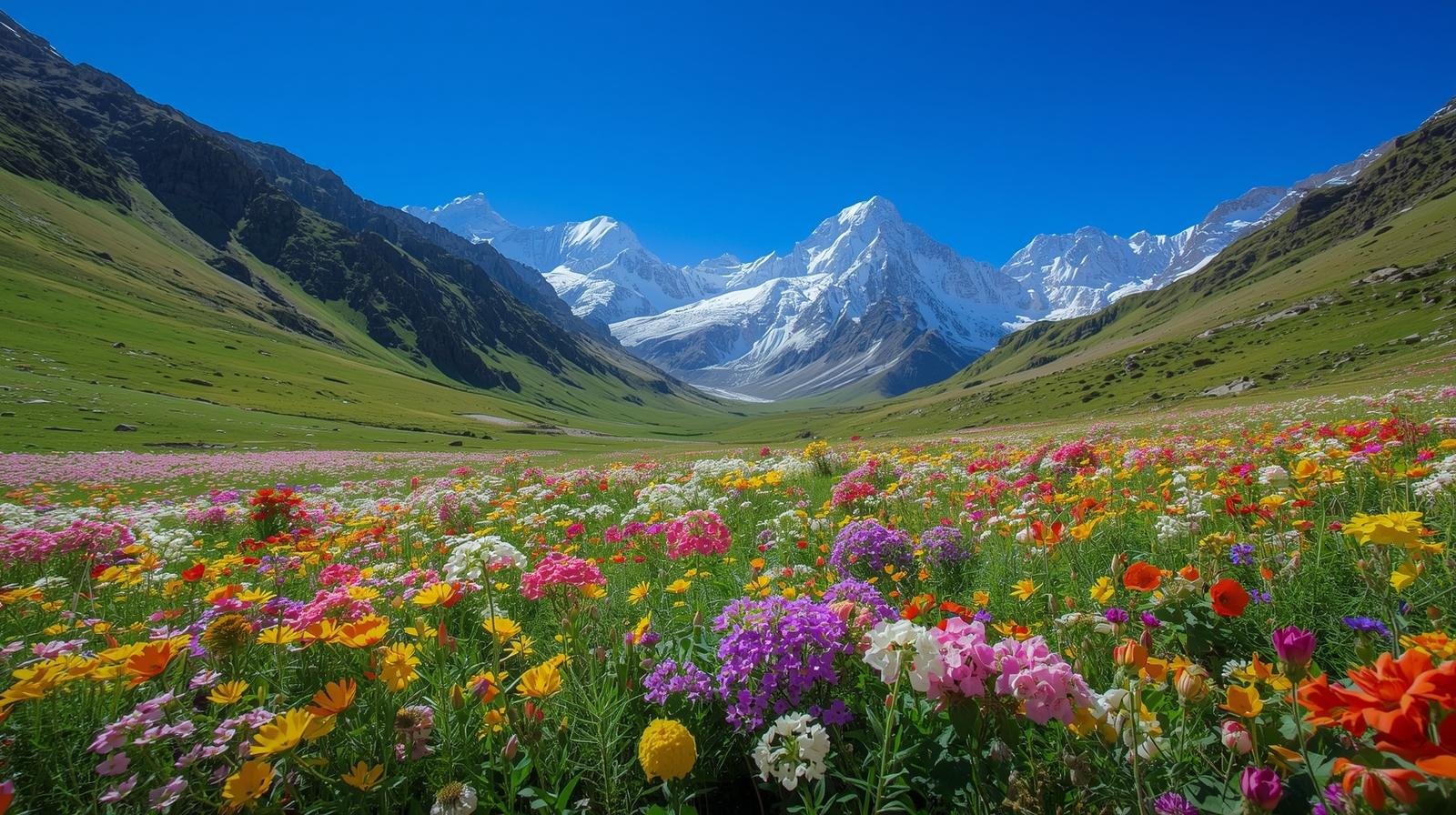
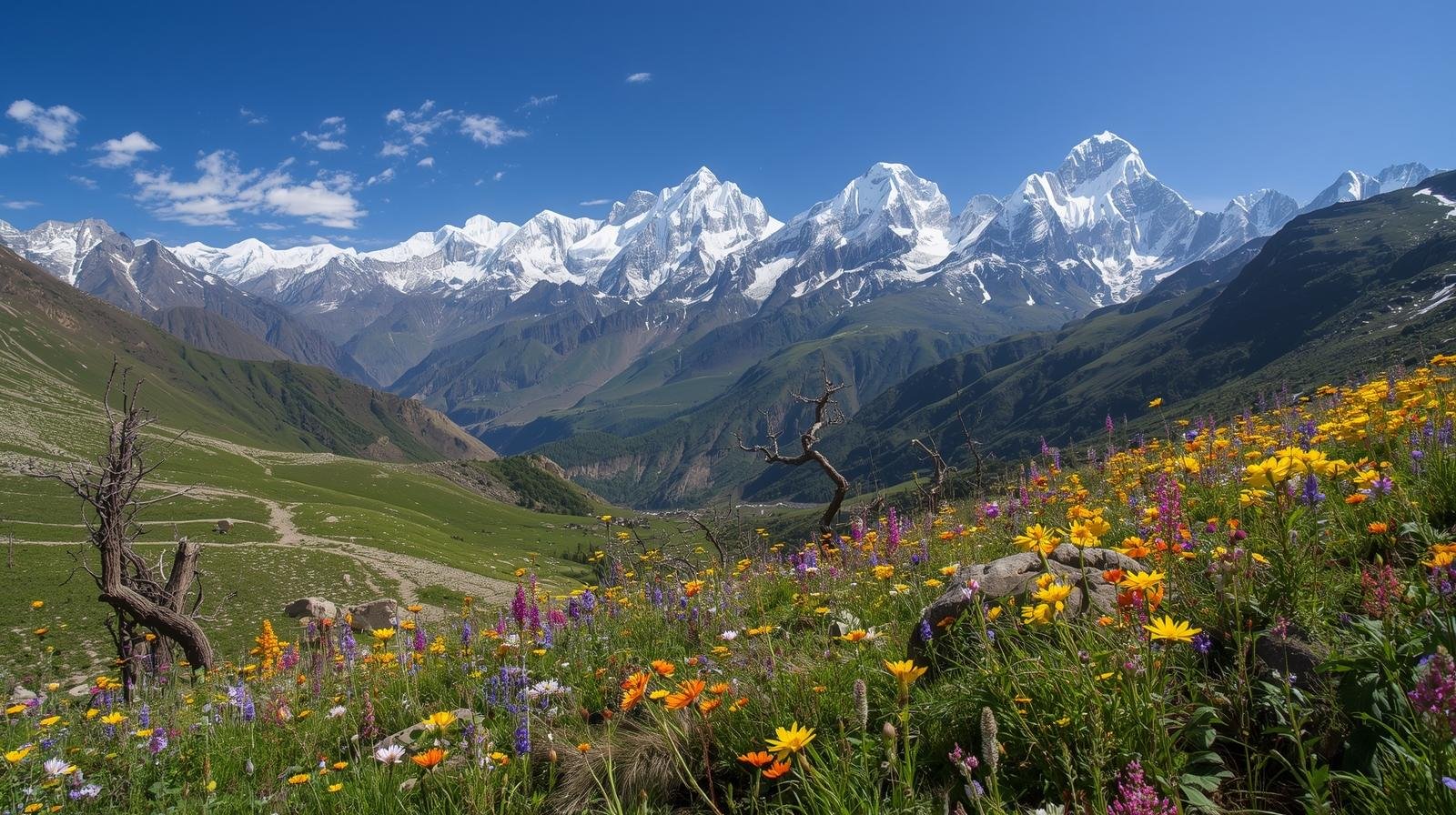
Every year, during the monsoon season, the valley transforms into a colorful carpet of blossoms including blue poppies, orchids, primulas, daisies, and the rare Brahma Kamal. Along with floral beauty, the trek also offers panoramic views of towering Himalayan peaks such as Nilgiri Parbat, Rataban, and Hathi Parbat. The trek is often combined with a visit to Hemkund Sahib, a revered Sikh pilgrimage site situated at an altitude of 14,100 ft (4,329 m) beside the glacial Hemkund Lake.
Unlike high-altitude expeditions such as Bali Pass or Rupin Pass, the Valley of Flowers Trek is beginner-friendly and suitable for families, first-time trekkers, and even solo travelers with basic fitness. The trails are well-marked, the daily distances are manageable, and accommodation is available in lodges and guesthouses at Ghangaria, the base village for both Valley of Flowers and Hemkund Sahib.
The trek is not just about walking through flower-filled meadows—it is an immersive Himalayan experience. You’ll cross rivers, walk through pine and oak forests, enjoy cascading waterfalls, and witness Himalayan wildlife such as musk deer, blue sheep, and even the elusive snow leopard (if lucky).
The valley is accessible only during the monsoon months from mid-July to mid-September. This is when the snow melts and the flowers bloom at their peak.
July: Fresh blossoms start covering the valley with lush greenery.
August: Peak blooming season – the valley is at its most colorful.
September: Fewer crowds and clear skies, with late bloomers still visible.
Each month offers a different charm, but most trekkers consider late July to August as the best time to visit.

Region: Chamoli, Uttarakhand (Garhwal Himalayas)
Maximum Altitude: 14,100 ft (4,329 m)
Trek Distance: ~38 km (round trip)
Duration: 6 Days
Difficulty Level: Easy to Moderate
Base Camp: Govindghat (near Joshimath)
The Valley of Flowers Trek is more than just a trek—it’s a journey into a living canvas painted by nature. With vibrant meadows, majestic Himalayan peaks, and spiritual energy from Hemkund Sahib, this trek is a once-in-a-lifetime experience. Whether you’re a first-time trekker or a seasoned adventurer looking for a soulful escape, the Valley of Flowers will leave you spellbound.
🌸 Plan your Valley of Flowers Trek in 2025 / 2026 and witness one of the most magical spectacles of the Himalayas.

Drive: 295 km | 8–9 hrs
Altitude: 640 m (2,100 ft) → 2,909 m (9,544 ft)
Stay: Hotel/Resort | Meals: Dinner
Begin with a scenic drive from Dehradun, passing through Rishikesh, Devprayag, Srinagar, and Karanprayag, following the Alaknanda River. Reach Joshimath/Auli by evening, check into your hotel, and explore the town at leisure.
Drive: 14 km | 45 min
Trek: 11 km | 5–6 hrs
Altitude: 2,909 m (9,544 ft) → 3,049 m (10,003 ft)
Stay: Hotel/Guest House | Meals: B/L/S/D
After breakfast, drive to Govindghat and onward to Pulna. Begin your 11 km trek to Ghangaria, a gradual ascent through forests, dhabas, and along the Pushpavati River. The trail is lively with pilgrims heading to Hemkund Sahib. Reach Ghangaria by evening and check into your hotel for overnight stay.
Altitude: 3,049 m (10,003 ft) → 3,500 m (11,432 ft) → 3,049 m (10,003 ft)
Stay: Hotel/Guest House | Meals: B/L/S/D
Start early from Ghangaria to explore the Valley of Flowers, a UNESCO site famed for rare Himalayan blooms like blue poppies, orchids, and primulas. Trek through forest trails, cross Pushpavati River, and witness vast meadows framed by snow peaks and glaciers. Visit landmarks like Lady Legge’s grave and spend time admiring or photographing the valley. After 1–2 hrs of exploration, trek back to Ghangaria by afternoon and enjoy a relaxed evening.
Trek: 12 km | 6–7 hrs
Altitude: 3,049 m (10,003 ft) → 4,572 m (15,000 ft) → 3,049 m (10,003 ft)
Stay: Hotel/Guest House | Meals: B/L/S/D
After breakfast, trek 6 km from Ghangaria to Hemkund Sahib, a sacred Sikh pilgrimage site. The well-marked trail passes alpine flowers and small dhabas. On arrival, visit the gurudwara, enjoy refreshments like Halwa and chai, and admire the surrounding glacial lake and peaks. Spend about an hour at the site before trekking back to Ghangaria. Evening at leisure.
Trek: 11 km | 5 hrs
Drive: 147 km | 5–6 hrs
Altitude: 3,049 m (10,003 ft) → 860 m (2,821 ft)
Stay: Hotel | Meals: B/L/S/D
After breakfast, trek back from Ghangaria to Govindghat. From there, drive to Badrinath, one of the Char Dham temples, for a spiritual visit. Continue the journey to Karanprayag, arriving by early evening. Check into the hotel and, if time permits, attend the evening Aarti at the confluence of rivers.
Drive: 210 km | 7–8 hrs
Altitude: 860 m (2,821 ft) → 640 m (2,100 ft)
Meals: Breakfast
After an early breakfast, drive from Karanprayag to Dehradun, passing through Devprayag and Rishikesh. Arrive by late afternoon, marking the end of your trek. Optionally, extend your stay in Tapovan or Rishikesh for further exploration and relaxation.
It is located in Chamoli district, Uttarakhand, inside the Nanda Devi Biosphere Reserve, a UNESCO World Heritage Site.
The ideal season is mid-July to mid-September, when the alpine flowers are in full bloom.
The trek is about 38 km round trip and typically takes 6 days including travel from Dehradun/Haridwar.
The trek reaches a maximum altitude of 4,329 m (14,100 ft) at Hemkund Sahib.
It is easy to moderate, suitable for beginners and families. The Hemkund Sahib day involves a steeper climb and requires good pacing.
Yes, a forest entry permit is mandatory and can be obtained at Govindghat. Fees vary for Indians and foreigners.
By Air: Nearest airport is Jolly Grant, Dehradun
By Rail: Nearest station is Haridwar
By Road: Regular buses and taxis from Dehradun/Haridwar to Govindghat
Accommodation is in guest houses or hotels in Ghangaria. Some treks offer camping options.
Treks generally provide vegetarian meals, including breakfast, lunch, evening snacks, and dinner. Jain and vegan options can be requested in advance.
Yes, the trek is family-friendly, though children should have basic fitness to walk 5–6 km daily.
It is highly recommended to hire a guide, both for safety and to enhance the experience with local insights about flora, fauna, and the region.
You’ll see over 600 flower species, including Brahma Kamal, primulas, and Himalayan bell flowers. Wildlife includes musk deer, blue sheep, and a variety of Himalayan birds.
Basic trekking gear is recommended: comfortable trekking shoes, warm clothes, rain gear, trekking poles, and a reusable water bottle.
Yes, adventure or trekking insurance is recommended as high-altitude trekking involves some risks.
Yes, most itineraries include a day trek to Hemkund Sahib, a spiritual site at 14,100 ft, located near a glacial lake.
Most days involve 5–12 km of trekking on gradual to moderate ascents, with Hemkund Sahib being the most strenuous due to altitude.
Yes, the trek is monsoon-friendly (July–September), which is the flowering season. Carry proper rain gear as trails can be slippery.
Basic medical help is available in Ghangaria, but trekkers should carry personal medications. Guides usually have first-aid kits.
Depending on inclusions (transport, meals, accommodation, guide), the trek costs around ₹22,000-35,000 per person.
Yes, trekkers are encouraged to carry reusable lunch boxes, avoid plastics, and follow Leave No Trace principles to preserve the pristine environment.

Member Since 2025