
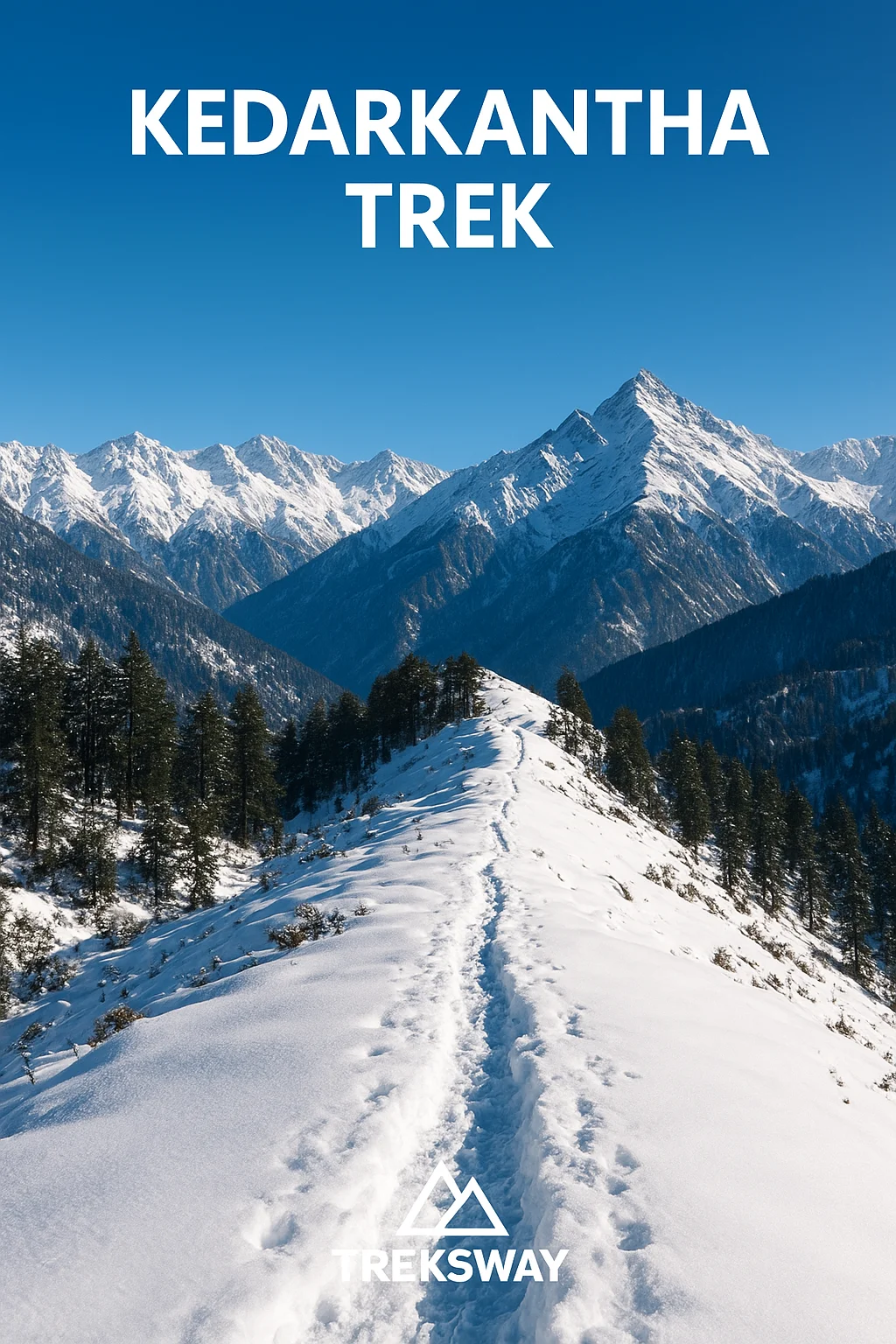

The Kedarkantha Trek is a popular winter trek in Uttarakhand, India, perfect for first-time trekkers and nature lovers. It takes you through Govind Pashu Vihar National Park up to a summit at 12,500 ft (3810 m). Despite the high altitude, the route is generally easy to moderate in difficulty, making it suitable for healthy beginners. The classic trek covers about 18-20 km over 4-5 days, with each day’s hike limited to 3-7 hours of trekking. Trekking is best done in winter (Dec-Feb) if you want snow on the trail.
Why Kedarkantha is a Top Winter Trek in India
Kedarkantha is famous for its snow-covered landscapes and panoramic mountain views. During winter, the trail is blanketed in deep snow, turning the forests and meadows into a “winter wonderland”. The summit offers glorious 360° views of Himalayan peaks like Swargarohini, Bandarpoonch, Black Peak, and Ranglana. The trek’s moderate grade and well-marked paths make it ideal for beginners seeking a Himalayan adventure. You’ll hike through dense oak and maple forests, cross wooden footbridges over streams, and camp beside a high-altitude lake (Juda-ka-Taal). The approach to Kedarkantha begins in the charming village of Sankri and includes a scenic drive through Mussoorie’s hills and the Govind Wildlife Sanctuary, rich with pine-blue forests and exotic flora.
Kedarkantha Trek Itinerary (5-6 Days)
- Day 1: Dehradun to Sankri (1950m) – Drive 7-8 hours from Dehradun, passing Mussoorie and Kempty Falls, then through the Govind National Park. Arrive Sankri by evening; enjoy mountain views (e.g. Mt. Swargarohini) and overnight in a guesthouse.
- Day 2: Sankri to Juda-ka-Taal (2773m) – 4 km, 4-5 hours trekking. The trail passes through the village of Saud, over wooden bridges, and through oak-maple forests carpeted with pine needles. In winter the path becomes a snowy wonderland. Camp beside the serene Juda-ka-Taal lake, surrounded by snow-covered trees.
- Day 3: Juda-ka-Taal to Kedarkantha Base Camp (3413m) – 4 km, 3-4 hours. A steeper climb through primeval oak forests. The Kedarkantha summit peak comes into view. Set up camp at base camp amid panoramic snowy peaks and prepare for an early start.
- Day 4: Summit Day (3810m) and Return to Hargaon (2700m) – 9 km, 6-7 hours. Start pre-dawn (around 3 AM) with headlamps in freezing conditions. The final ascent is steep and snow-clad. Reach the summit for sunrise views over the Gangotri and Yamunotri ranges. Descend to base camp for lunch, then continue down to Hargaon campsite (2700m) under starry skies.
- Day 5: Hargaon to Sankri (1950m) – 6 km, 4-5 hours. Descend through meadows and forests back to Sankri. Trekkers typically arrive by early afternoon. Overnight in a Sankri guesthouse.
- Day 6: Departure from Sankri – Continue your journey home or onward to Haridwar/Delhi.
Scenic Landscapes and Wildlife

The Kedarkantha trail offers stunning Himalayan scenery at every turn. In winter, the slopes and ridges are cloaked in white snow, contrasting with clear blue skies. You will trek under tall oak-maple forests, crossing creaking wooden bridges over icy streams. The region is rich in flora and fauna: Rhododendron and chir pine line the trail, and you may spot Black Eagles or Golden Eagles soaring overhead. Base camps open onto panoramic views of snow-capped peaks like Bandarpoonch and Swargarohini. Hikes through these winter woods, with the Himalayas unfolding around you, create an unparalleled trekking experience.
Another highlight is camping beside the frozen Juda-ka-Taal lake. On Day 2, after trekking 4-5 hours, you reach this small teardrop-shaped lake ringed by oak and pine. In winter the lake often freezes, turning the campsite into a snowy playground. Trekkers pitch bright tents on the snow and gather under the starry sky, with the ice reflecting the surrounding mountains. This pristine high-altitude lake campsite is one of Kedarkantha’s most memorable sights.
Packing List and Preparation
Proper gear is vital for a safe, comfortable trek. Pack in layers:
- Clothing: Thermal base layers, a fleece or insulating mid-layer, and a high-quality down jacket (rated to -10°C or lower). Waterproof outer layers or rain jacket/poncho.
- Footwear: Sturdy waterproof trekking boots and woollen socks. Bring an extra pair in case one gets wet.
- Essentials: A 60-70L backpack (with rain cover) to carry your gear. A 10-20L daypack for summit day. Trekking poles, gaiters, and micro spikes may be provided for snow hiking.
- Accessories: Warm hat, gloves (waterproof, bring at least two pairs), neck gaiter, UV-blocking sunglasses, and high-SPF sunscreen.
- Other: Hydration (insulated water bottle or thermos), water purification tablets, energy bars, personal medications, toiletries, headlamp with extra batteries, and a basic first-aid kit.
- Camping gear: If trekking independently, bring a warm sleeping bag (0°C rating or better). Many guided treks include sleeping bags and mats.
To prepare physically, start a routine of brisk walking or jogging weeks before the trek. Practice hiking with a loaded backpack if possible. Good cardio fitness and leg strength will make the journey more enjoyable.
Safety Tips
- Acclimatize and Hydrate: Increase altitude gradually. Take short breaks every few hundred feet (about every 100 m of ascent) for deep breathing and snacks. Drink water regularly even if you don’t feel thirsty to prevent dehydration and altitude sickness.
- Pace Yourself: Trek at a comfortable pace (your “golden pace”) rather than rushing uphill. The summit day is long; starting early helps you avoid afternoon fatigue.
- Stay Warm and Dry: Bring spare batteries and power banks. Electronics drain faster in cold weather. Keep batteries warm by storing them close to your body at night. Change out of wet clothes quickly to avoid hypothermia.
- Follow Your Guide: Hiring an experienced guide (as Treksway provides) greatly improves safety. Guides monitor the weather, set a safe pace, and are trained in first aid. Never stray from the group, especially on snowy slopes.
- Weather Awareness: Check forecasts and heed any warnings. Avoid trekking during heavy snowfall or storms. In winter, temperatures can drop well below freezing, so plan accordingly.
- Altitude Precautions: Mild altitude sickness can occur. Descend immediately if severe symptoms arise. Common preventive measures include gradual ascent and adequate rest.
Plan Your Adventure with Treksway
Kedarkantha promises adventure at every step, from snowy meadows to breathtaking summit views. To make the most of it, consider booking with Treksway. Our expert guides provide local knowledge, safety gear, and seamless logistics from start to finish. Whether you’re a first-time trekker or a seasoned hiker, Treksway ensures a memorable, stress-free experience.
Book your Kedarkantha adventure with Treksway now!
Best Time for Kedarkantha Trek
Kedarkantha is a year-round trek, but each season offers a different experience. Here’s the best time depending on what you want:
| Snow Trek (Peak Season) | Clear Views | Mix of Snow + Easy Conditions | Comfortable Trekking |
| December to February – THE REAL WINTER WONDERLAND ✔ Heavy snow on all campsites ✔ Frozen Juda-ka-Talab ✔ Best sunrise summit views ✔ Perfect for a true snow adventure Who should choose this? • Beginners wanting a snow trek • Photographers • Adventure lovers | October & November – Crystal-clear Himalayan views ✔ Zero rain ✔ Clear skies for photography ✔ Light snow may begin in late November Who should choose this? • View lovers • Solo trekkers • Families | March & April – Spring Season ✔ Snow remains at higher camps ✔ Warmer days, easier trekking ✔ Green forests + snowy ridges Who should choose this? • Beginners • People who avoid extreme cold | May & June – Summer Season ✔ Dry trails ✔ Pleasant temperatures ✔ Best for first-time trekkers Who should choose this? • Families • Casual trekkers • Late planners |
Kedarkantha Temperature Guide (Month-Wise)
Altitude: 12,500 ft (3810 m)
Location: Govind Pashu Vihar National Park, Uttarkashi (Sankri region)
| Month | Day Temperature | Night Temperature | Conditions |
|---|---|---|---|
| December | 5°C to -1°C | -5°C to -10°C | Heavy snow, ideal for winter trek |
| January | 0°C to -5°C | -10°C to -15°C | Coldest month, deep snow, icy trails |
| February | 3°C to -2°C | -5°C to -12°C | Snowy but slightly warmer than Jan |
| Month | Day Temperature | Night Temperature | Conditions |
|---|---|---|---|
| March | 8°C to 2°C | -3°C to -7°C | Fresh snow + beginning of spring |
| April | 10°C to 5°C | 0°C to -2°C | Snow melts, meadows open up |
| Month | Day Temperature | Night Temperature | Conditions |
|---|---|---|---|
| May | 12°C to 10°C | 3°C to -1°C | Pleasant weather, greenery |
| June | 15°C to 12°C | 5°C to 2°C | Warm days, perfect visibility |
| Month | Day Temperature | Night Temperature | Conditions |
|---|---|---|---|
| July | 12°C to 15°C | 6°C to 8°C | Heavy rain, leeches, landslides |
| August | 10°C to 12°C | 5°C to 7°C | Slippery trails |
| September | 10°C to 8°C | 2°C to 4°C | Post-monsoon clear views |
| Month | Day Temperature | Night Temperature | Conditions |
|---|---|---|---|
| October | 8°C to 4°C | 0°C to -3°C | Clear skies, best visibility |
| November | 5°C to 0°C | -3°C to -5°C | Cold nights, early snowfall begins |
How Cold Does It Really Feel on the Summit?
- Summit (12500 ft) during winter dawn:
-12°C to -18°C with windchill - Base Camp in winter nights:
-5°C to -12°C
Trekking at 3 AM for summit push feels extremely cold — proper layers are crucial.
Kedarkantha Weather Guide (Season by Season)
Altitude: 12,500 ft (3810 m)
Region: Uttarkashi, Govind Pashu Vihar National Park
Kedarkantha’s weather changes dramatically with seasons. Here is exactly what trekkers experience.
WINTER (December – February)
Weather: Extreme cold, heavy snowfall
- Day: -3°C to 5°C
- Night: -10°C to -18°C (with windchill)
- Snowfall is frequent and deep (1–4 ft).
- Campsites like Juda-ka-Talab & Base Camp stay fully snow-covered.
- Summit push at 3 AM is the coldest part of the trek.
This is the prime season for a true snow trek.
SPRING (March – April)
Weather: Cold but moderate, melting snow
- Day: 5°C to 12°C
- Night: -5°C to 0°C
- Snow melts in lower camps but remains on upper slopes.
- Forest sections open up with fresh greenery.
Best for trekkers wanting snow + easier conditions.
SUMMER (May – June)
Weather: Pleasant, clear & stable
- Day: 12°C to 18°C
- Night: 3°C to 8°C
- Dry trails, excellent visibility.
- Meadows become green and vibrant.
Most comfortable weather for beginners.
MONSOON (July – September)
Weather: Rainy, slippery & risky
- Day: 12°C to 16°C
- Night: 6°C to 10°C
- Heavy rainfall, leeches, mud, and landslide risk.
- Trails become very unsafe.
Trekking is NOT recommended in monsoon.
AUTUMN (October – November)
Weather: Crystal clear skies, cold nights
- Day: 6°C to 12°C
- Night: -3°C to -6°C
- Best visibility of peaks (Swargarohini, Black Peak, Bandarpoonch).
- Light snowfall begins in late November.
Great for photography + clear summit views.
Kedarkantha Summit Weather (Real Feel)
- Winter summit wind chill: -12°C to -18°C
- Wind speed: 15–30 km/h
- Best summit time: 3 AM – 8 AM
Cold + strong winds make proper layering essential.
Weather Tips for Trekkers
- Always carry 3-layer winter system (thermal + fleece + down).
- Keep hand gloves waterproof in snow season.
- Start summit early to avoid harsh afternoon winds.
- Protect electronics — cold drains battery quickly.
- Use microspikes + gaiters in snow (Treksway provides).
Kedarkantha Trek Distance
Total Trek Distance: 20–23 km (Round Trip)
The exact distance depends on the route and campsite selection, but most standard itineraries cover 20–23 km over 4–5 trekking days.
| Section | Distance | Duration |
|---|---|---|
| Sankri → Juda Ka Talab | 4 km | 3–4 hrs |
| Juda Ka Talab → Base Camp | 3–4 km | 3 hrs |
| Base Camp → Summit | 2–3 km | 2–3 hrs |
| Summit → Hargaon | 4 km | 3–4 hrs |
| Hargaon → Sankri | 6 km | 3–4 hrs |
| Total Distance | 20–23 km | 4–5 days |
FAQ Kedarkantha Trek
Q: What is the best time to visit Kedarkantha?
A: For a true winter trek with snow-covered trails, visit between December and February. Spring (March-April) and autumn (Oct-Nov) also offer pleasant weather and green meadows. Monsoon (July-August) is not recommended due to heavy rain.
Q: How fit do I need to be?
A: Kedarkantha is rated easy-to-moderate. It’s suitable for beginners with a reasonable fitness level. Expect 4-6 hours of trekking each day, with the summit day being the most challenging due to steep snow. Regular exercise before the trek is advised.
Q: Will I have mobile network or electricity?
A: Mobile connectivity is sparse on the trek. You may get occasional signals at certain points, but do not rely on it. Keep loved ones informed before you go. Electricity is limited: Sankri and nearby villages have power, but camps do not. Bring power banks and extra batteries.
Q: What should I pack?
A: Bring warm layered clothing, waterproof gear, a sturdy backpack, and good boots as outlined above. Don’t forget sunglasses, sunscreen, snacks, and a basic first-aid kit. The detailed list above covers all essentials.
Q: How many days does the trek take?
A: The standard Kedarkantha itinerary is 5 days of trekking (plus arrival/departure days), covering about 20-25 km total. Some schedules extend to 6 days with a rest or travel day. Daily distances are moderate (3-9 km) making it manageable for most trekkers.
Q: Can beginners or children do this trek?
A: With proper preparation, even first-time trekkers can enjoy Kedarkantha. Treksway offers support and flexible pacing for groups. A basic level of endurance (e.g. ability to walk several hours) is ideal. Younger children may find the cold and long walks challenging; check with Treksway for age guidelines.
Q: What is the local culture like?
A: The trail passes through traditional hill villages in Uttarakhand. Villagers are warm and welcoming. You might experience local Kumaoni cuisine at Sankri (dal-chawal, potatoes, etc.) and see how mountain communities live. However, most of the trek is through forests and camps, so cultural encounters are limited to village stops.
Q: What wildlife might I see?
A: The Kedarkantha region is rich in Himalayan flora and fauna. Keep an eye out for high-altitude birds (golden eagles, Himalayan monal), and signs of animals like langurs or Himalayan black bears (rarely seen). The forests bloom with rhododendrons in spring, and pine forests offer a crisp scent in autumn.
Q: How do I book this trek?
A: You can book the Kedarkantha trek through Treksway by visiting our website or contacting our travel experts. Treksway provides all camping gear, local guides, meals, and permits as part of the package. Book your Kedarkantha adventure with Treksway now!

0 Comment